
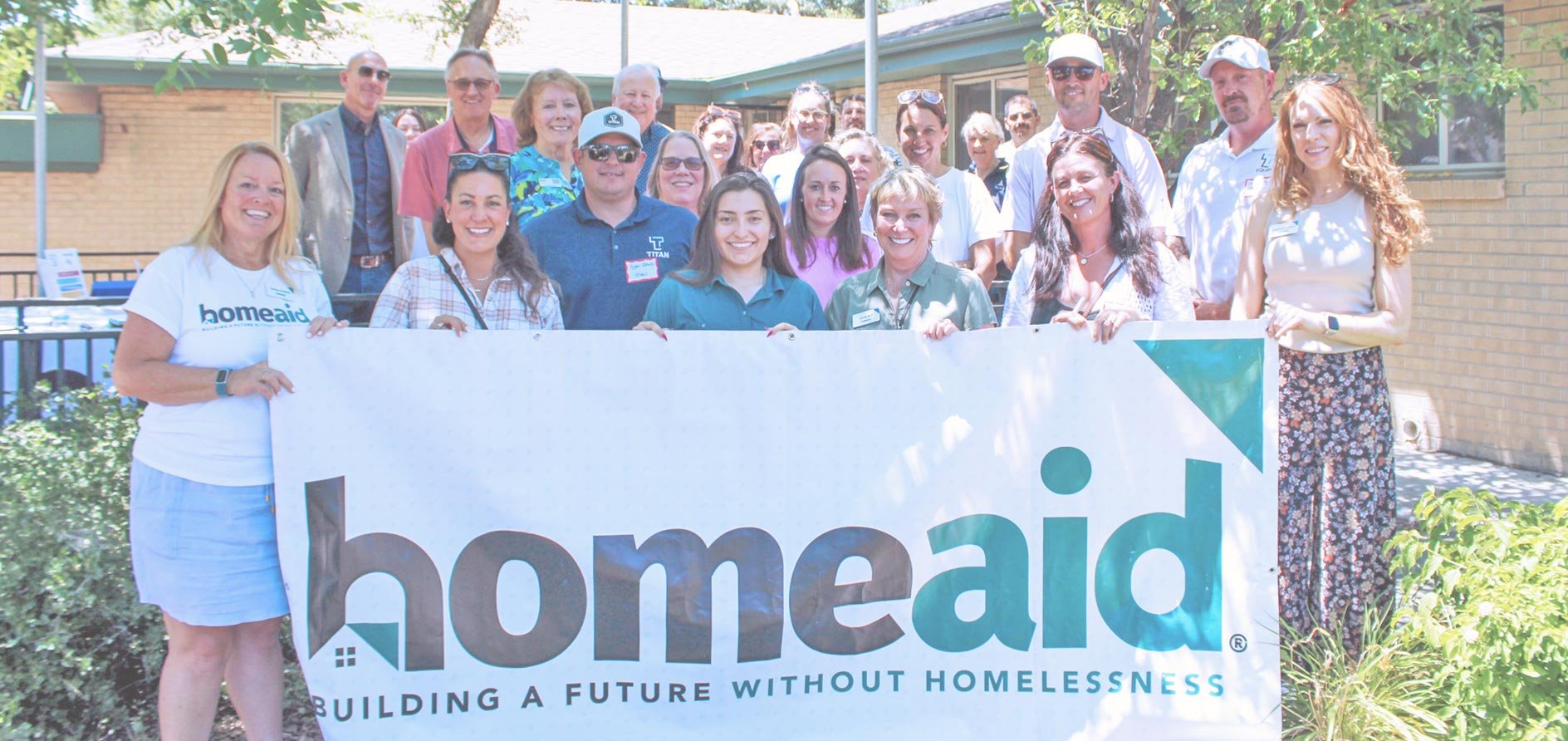
Transcript for (S7E3) From Homelessness to Hope: A Bold Partnership in Denver
Lisa: And there literally was no one in the Denver metro area that was providing housing for a parenting teenage mom. We had maternity homes if you were pregnant, and transitional housing and shelters if you were 18 or even 21. But if you were under 17 and had a child, there was literally nowhere for you to go.
Brian: I am Brian Maughan, Chief Marketing and Innovation officer at Fidelity Financial and this is Built, where you’ll meet creative leaders in commercial real estate. And this season, we are going BOLD with big ideas and the people who make them real.
Lisa: A group of us got together and said, Hey, someone should do something about that. And we felt like God kind of said to us, well, you might be that someone and we felt that he called us to do something special and extraordinary for our mamas and we just were brave enough to say yes.
In this episode, we shine a spotlight on Denver, Colorado’s Hope House and their partnership with HomeAid, an incredible nonprofit leading the fight against homelessness nationwide. Joining us is Scott Larson, HomeAid’s passionate CEO.
We also go on a tour with Lisa Steven, the founder and Executive Director of Hope House, an organization dedicated to single mothers facing homelessness and overcoming the challenges that come with it. Lisa shows us their vibrant resource center — a powerful collaboration between HomeAid and Hope House that’s transforming lives across the Denver metro area.
SEG A – Before HomeAid got involved
Lisa: I was a teenage mom myself. I started working with teenage moms in 1997 in a support group setting and just was kind of stunned at how many teen moms were living in homes where there was a lot of violence or alcohol addiction or drug addiction or just plain old homelessness kind of moving around, from couch to couch. And sadly, that's still often the case for our teen moms.
Brian Narration: Drawing from all those experiences led Lisa Steven to one insightful question.
Lisa: Well, who's out there providing housing for teenage moms?
Brian: Lisa envisioned a place where single mothers could go and find tools to help them thrive.
Lisa: When we opened, we served two to three moms at a time through our residential program. Over the years, we've just grown and grown to the point now where we're serving 280 teenage moms, from all over the Denver metro area.
Lisa: We started out when the home that we had moved into was donated to us with the provision that it be picked up and moved off the property that it sat on because that land was gonna be developed into town homes.
And so the church that we are currently next door to on this location where we're at now. Donated the land for us to move the house to, and the house was moved in the middle of the night in December, 2004. and that is how we got started
Brian narration: Hope House came up with their own metrics to measure success.
Lisa: Personal self-sufficiency and economic self-sufficiency. So on the economic self-sufficiency side, that's anything related to education or your financial literacy or housing or transportation. On the personal side, it's oftentimes counseling or personal growth classes, healthy relationships classes.
Brian narration: Lisa could see that their work was having a positive effect on the three families they had room for at Hope House. But they didn’t want to stop there.
Lisa: So it wasn't until one of our board members who we shared with HomeAid Colorado. Made the suggestion that we reach out to HomeAid to see if they would consider building a commercial building, even though they typically To that date built primarily, houses or, residential, buildings. I had no idea there was such a big difference between residential and commercial buildings.
SEG B: Home Aid + Hope House
Scott: When HomeAid was initially founded, it was residential home builders that were looking at how do we help those experiencing homelessness.
Brian Narration: This is Scott Larson. He’s based at HomeAid on the West Coast, but met us at Hope House.
Scott: And the opportunity for the building industry, and initially that was the residential home building industry, to bring their skills and talents, what they do for a living, to help those that do not have housing, was where HomeAid got started.
Scott: In 1995, we started affiliates around the country, Northern California, Portland. We now have 19, almost 20 affiliates. Our newest affiliate we're establishing is gonna be in the Delaware Valley, and each of those affiliates are set up as an independent business enterprise and looking at the needs of their communities.
Brian narration: HomeAid is selective about who they work with.
Scott: So they're nonprofit organizations. We establish a board of directors, people that are from the building industry that want to be involved and We start to look for key projects in that local community. So there's been about 1500 projects that we've been engaged with, and over 15,000 beds that have been created every year.
Scott: There's all kinds of projects that need to be built. Time and time again, we came across projects that needed a commercial. Component to it. It could have been a commercial kitchen, could be a laundry facility.
So we just look at who has the passion, who has the skills and expertise, and how do we get them involved with a particular project that we've identified in their community that needs to be done? So there's a direct intersection with both residential and commercial real estate with the work that HomeAid does.
Brian: Scott grew up with a love for construction and in his early years he sold building materials. As his professional career progressed, he found himself teaching and working for mission-driven organizations.
Scott: I was actually working for the American Red Cross for a couple of years when a friend of mine called me and said, Scott, I have this opportunity and I think you should consider, with your nonprofit background and your construction background.
There's a small organization by the name of HomeAid that's looking for an executive director and. When I looked at it and I saw it, I was hooked because it combined all of my interests personally, from construction and the desire to build and my interest in nonprofits and the social service sector.
Scott: I ran the HomeAid Orange County affiliate, the founding affiliate of HomeAid. For a little over 20 years and stepped into the national role overseeing the work of HomeAid America, almost six years ago.
Brian: HomeAids's first project was renovating two farm houses for an organization that was aiding homeless families
Scott: When you look at the mission of HomeAid, we have a tagline that says Building a future without homelessness. But what it really gets down to is everybody deserves a dignified place to live.And the opportunity for the building industry, and initially that was the residential home building industry, to bring their skills and talents, what they do for a living, to help those that do not have housing, was where HomeAid got started.
Brian: As a society, Scott says we have a few misconceptions about the homeless.
Scott: One of the first ones is every homeless person that I see on the street is the same. They're all drug addicts. They're all suffering from mental illness. Now, I'm not gonna discount the fact that there is addictions,
But when you look at the breadth of people that are experiencing homelessness in the community, that segment that the people see on the street corner is maybe 20%, maybe pushing 30 in certain communities, maybe in larger urban areas.
There are so many people that are in this category that are either. At risk or literally experiencing homelessness that people do not see. So yes, there's no denying the fact that there are people on the street corners but there's answers for those as well.
Brian: We also don't know just how close homelessness is to each of us.
Scott: Well, when you begin to talk to people, homelessness is literally one person away. Yeah, there's someone that you know in your family, your friends, your coworkers, if you really begin to delve into it, that might be sleeping in their car and you don't know it. They might have had issues with addiction and you don't know it.
They might have a family member that is experiencing issues related to schizophrenia, mental health issues, and you don't know. And once you begin to look at it from a human perspective, like here at Hope House, that young mom who might be 15 years old, that's your neighbor.
That's someone in your community might need some assistance at this point. So it's a mental shift. Where does compassion fit? All of us have the ability to have compassion. We might not all have money, we might not have other resources, but we all can have compassion. So that's some of the myths you need to shift. It's a human issue. It's not a them, it's an us it issue.
Brian: It was as if Hope House and HomeAid were destined to work together because both organizations believe that homelessness needs to be fought on multiple fronts.
Scott: Every community needs to really look at, do we have the adequate services?
Scott: For the person that, for example, is experiencing mental health issues, how about the individual that is living on the streets that might be dealing with cancer? Are we addressing those core, basic needs in providing recuperative care? And it's what's called the continuum of care.
Scott: So they had a vision to create a resource here in the Denver metro area that could provide all of the different navigation tools for these young moms that might have a very unstable life at whatever their home is.
They might be couch surfing. They're with friends, or they're with other families. They might've had to drop out of school. So the vision behind Hope House was to build a community around volunteers and key staff members to provide the resources that these young moms and in turn their babies needed.
Brian: Next to Hope House’s original residence, the dream was to build a 15,000-square-foot resource center with HomeAid’s help. It would serve up to 400 mothers annually.
Brian: Scott reflects on how Hope House addressed a need in the community when they began over 20 years ago, and how HomeAid stepped up to help them expand.
Scott: And when the opportunity came to HomeAid to get involved, it was because there's a need.We can do this, we can help this organization. And that's where the blend of passion, the blend of skills and expertise. Come together as HomeAid partners with an organization like Hope House.
Scott: We have the ability as an organization to pull people together and to look cross-sector and say, let's figure out how we're gonna work together. But the thing that is inherently, that makes HomeAid. What I call the only organization that's doing what we're doing is that we're bringing the building industry expertise to these groups that want to end homelessness in their community but don't know how.
They don't know how to build. And ultimately, if you are to end this issue, you need a building, you need a resource center, you need the food bank, you need housing, and HomeAid can come in. With our resources and look at how we best can fit those gaps and build what needs to be built. That's how we are unique.
Brian: Like most Non-profits, HopeHouse ran into a funding issue when it came to that much-needed Resource Center.
Scott: In Round Numbers, it was about a $5 million project, but they were short on some of the funding, and that's where HomeAid really came in and filled the gap through the donation of labor, materials , intellectual capital, you know, variety of different services. They were able to reduce the cost of this project significantly as with all the HomeAid projects..
Scott: HomeAid’s basic funding comes from the building industry itself. We get sponsors who get people that believe in what we do, and then every project ends up having its own budget and HomeAid works closely with that local nonprofit to make sure that the dollars are there.
Scott: There's grants that are applied for, sometimes there's public money, sometimes there's a capital campaign, we believe in the projects that we adopt There's always challenges, but. When people see the projects and what we're doing is worthy of investing in, the funding flows.
Lisa: And this building took.Oh gosh, close to five years from the time we conceived of it to the time that it was actually built and we were doing the, grand opening, primarily because so much of it had to be donated, and so we were contingent upon other people's timelines, but.
The day came and it was a beautiful celebration when we opened. Just last year we also completed an early learning center on our campus just next door to this resource center. So now we can serve about a hundred of our children, of our teenage moms with full-time daycare, in addition to everything we can do in this resource center building.
Brian: Let’s continue with Lisa Steven on a tour of the resource center that the collaboration between HomeAid and Hope House made possible.
Seg C – what it’s like now
Lisa: We had a wonderful Building Captain, Meritage Homes, who was willing to come alongside and do this project with HomeAidhomemade. You can see this great picture of the groundbreaking and the equipment working, to dig a 20 foot. Basement, which is the lower level that we're standing in now. So that we could have all of this space for the learning lab and the Mama Bear cave and the extra study rooms that we have down here.
Lisa: So we're gonna take a little walk down the hall here to our. Learning lab on the lower level of the building. We spent a lot of time trying to decide whether we could afford to put in a basement, which of course would double the amount of space that we had to serve our moms and the partnership with HomeAid Colorado.
Lisa: Is really one of the things that allowed us to make that decision to go ahead and put in the lower level so that we have all of this space. it allowed us to, build out what we call our learning lab, which is where all of our educational programs take place from our GED and high school program to college and career to financial literacy to legal advocacy where, moms who are struggling with parenting orders or custody issues can meet with someone to help them with that work. So we're gonna head down the stairs, and you're gonna notice on this wall as we're heading down, there's a huge,black and white photograph of a group of our teenage moms in their cap and gown.
At their GED graduation celebration because we want the moms to know as they head down these stairs to the learning lab, that this is you. You are going to get to have your cap and gown graduation celebration. You did not give that up when you became a teen mom.
Lisa: So we are heading into a big open space called our Mama Bear Cave. And this space is, pretty much like a big large living room slash rec room and our mamas got to name this space. We started Hope House, and did this capital campaign to raise the funds for this building,
Lisa: So you're gonna hear some of our little ones playing in the background, on the little wooden kitchen and the wooden train table. And we've got little one pushing around a shopping cart behind us.
And mama meeting with some of our staff working on housing, which is one of our primary programs. we have. About 180 moms that will serve this year through our housing support program. And that could look like anything from navigating a lease.tohow to work with this landlord who maybe won't.
Fix a bug problem or won't help me with something that's going on with plumbing, to, gosh, what is eviction and how do I avoid eviction so how do we help them navigate that as well as finding housing partners, many of whom home HomeAid Colorado has worked with as well.who house our mamas and provide amazing partnership for us.
Brian: Things that may seem simple, like doing laundry, are also more complicated as a young mom.
Lisa: One of the things you'll notice as we're walking down the hall is that we have a laundry room for our moms. When I was a teenage mom, I really didn't like going to the laundromat. It's just crowded and messy and it's not fun to be there for two or three hours with your children. And so I really felt strongly we had to have a laundry room so our moms could do laundry here and hang out in the mama bear cave while they're doing laundry.
Brian: Hope House models a community that indeed provides strength in numbers.
Lisa: So we are walking past the door to our commercial kitchen where we prepare. food for our moms. We have volunteers who come in, to cook for our mamas. We're open two nights a week, from 8:00 AM to 8:00 PM and we also have volunteers who come in and prepare lunch and serve lunches five days a week for our mamas.
So we're entering one of our early learning classrooms. This is one of our amazing volunteers who's here to help us, with our kiddos. We could not operate our early learning program without our volunteers. They are so critical and allow us to be able to serve more kids each day.
So in our early learning program, we have our kiddos for up to three hours at a time, and our teachers and volunteers do amazing work with our kids.
Lisa: In those short number of hours. they'll work on gross motor skills, fine motor skills, social emotional development. We will be working on the five different domains of learning that are so important and making sure that our kids are on target for their developmental milestones.
Brian: Those at HopeHouse understand that true success doesn't just happen overnight. It's a gradual process.
Lisa: We have a beautiful young lady named Janelle, who actually was part of the ribbon cutting when we opened this building in 2019.
Lisa: And she first came to us, to be a part of our GED program, She oftentimes,would keep pretty much to herself. And so nobody really realized that she was. In and out of her boyfriend's, mother's home, So it wasn't until she called one night and said, Hey, I'm sleeping in my car tonight with my two boys and a snowstorms coming, and I'm not sure I have enough gas to keep the car going all night long to keep us warm, So we immediately got her into a hotel. and about two days later we're able to get her into the residential program.
From there, she completed her GED, she went to counseling. She attended all of our parenting classes. just really grew and decided she wanted to go to college and She went to a two year applied science program, and became a machinist and. Our one and only mom to become a machinist, still works at Ball Aerospace and today is married and she and her husband own their own home and have one additional little boy and are just doing really well.
But her story, of course, takes a long time. So we serve our moms from the ages of 15 through 25. So it's a continuum. We don't go from that crisis of coming through the door, homeless to self-sufficiency in two years. It takes a long time and a lot of backward and forward to become self-sufficient.
Brian: Lisa describes the secret ingredient.
Lisa: Relationship is at the heart of everything we do here, so we're continually finding ways for them to connect with each other, to connect with our staff and with our volunteers because really no change or transformation happens outside of healthy relationships.
Brian: During the tour we ran into Ashley, one of the moms at Hope House.
Ashley: One of my favorite things that I have learned here at Hope House is how to become a better mom for my babies. At first when I became a teen mom, I was scared and I didn't know how to be a mom.So just coming here and the support that we have from Hope House made me a better mom.
Lisa: So the other thing that you'll notice in this big dining room of ours is that we have a huge orchestra style gong in the corner. And our gong with our Hope House logo on it is used to celebrate our mom's.
Anytime something amazing happens, so, they finish a GED test, they get their driver's license. maybe they got the keys to their first apartment. We do a gong ringing and everybody gets together to ring the gong and celebrate. And one of my favorite memories with HomeAid was when we opened this building and we did a huge gong ringing with all of our builder, um, vendors and subs and HomeAid to ring that gong and celebrate the opening of this building.
Brian: But HopeHouse and HomeAid didn’t stop working together once the resource center was built.
Lisa: Another huge blessing that we have, getting to partner with HomeAid Colorado is their Builders for Babies program. I think they might have collected somewhere in the neighborhood of 1 million diapers this past year and distributed them to nonprofits all across the front range.
We are one of the lucky ones to receive those diapers. We have an enormous closet that's packed from floor to ceiling with diapers thanks to builders for babies from HomeAid Colorado.
This is the, space where moms get to shop from all of the amazing donated items that our volunteers bring for us, from baby clothing to professional clothing for our moms that are getting ready to go on an interview, oftentimes folks don't know that you can't buy anything but food with the food assistance Program called snap, or some people know it as food stamps.You can't buy cleaning supplies or diapers or,hygiene products. And so we stock those items that volunteers bring us so that moms can come and shop for those things.
Brian: As the battle against homelessness continues, Lisa and Scott look forward to the road ahead.
Scott: Collectively, HomeAid has helped over 1.4 million people in variety of services and programs, and each year we're adding more projects, we're adding more services, we're adding more capacity to the local nonprofit community to serve more.
So our 20 affiliates are in 13 states, from Hawaii all the way to Florida, and then going up the East coast. And, we're also working in the District of Columbia, and we probably have about five to six new markets that we're looking to target in the next couple of years.
Lisa: We are 23 years old this year, and so we have learned a lot. We've grown a lot, we've codified a lot, so now we've got a lot of processes and systems in place that we can share with others who'd like to open a home or a resource center for teenage moms in their community and other parts of the country.
We have one affiliate location in Northern Colorado and one in Canyon City, in the southern part of our state, and are just about to work with a group in Raleigh, North Carolina to open our Hope House affiliate outside of the state of Colorado.
Brian: As we wrap up the tour, we remember that the collaboration between Hope House and HomeAid gave space for the another secret ingredient to grow – the determination of young mothers to achieve the best for themselves and their children.
Scott: The empowerment that these women have because of Hope House, that is success. Cause when they walk out this door, regardless of what they are confronted with in their family life, job life, relationships, et cetera. This is an anchor for them. This is success. This is giving them the opportunity to move forward. It's amplified through the programs and the services. That's what success is in the lives of these women.
Brian: I want to thank both Scott and Lisa for taking the time to speak with us today. It's truly remarkable work that they are doing and surely an inspiration to us all.
Brian: Don’t miss out on all the great stories from our past seasons! If you haven’t caught up yet, now’s the perfect time. You can find Built on all your favorite podcast platforms—and if you’re enjoying the show, we’d love for you to leave a rating or review!
Brian: Built is a co-production of Fidelity National Financial and PRX Productions. From FNF, our project is run by Annie Bardelas. This episode of Built was produced by Emmanuel Desarme. Our Senior Producer is Sandra Lopez- Monsalve and our editor is Genevieve Sponsler [spon-slur].Production support by Adriana Rozas Rivera. Audio mastering by Rebecca Seidel [sigh-DELL]. The location producer for this episode was George Figgs.
The Executive Producer of PRX Productions is Jocelyn Gonzales.
I’m Brian Maughan.
Thanks for listening to BUILT, where we explore bold developments in distinct markets, reshaping our BUILT world